
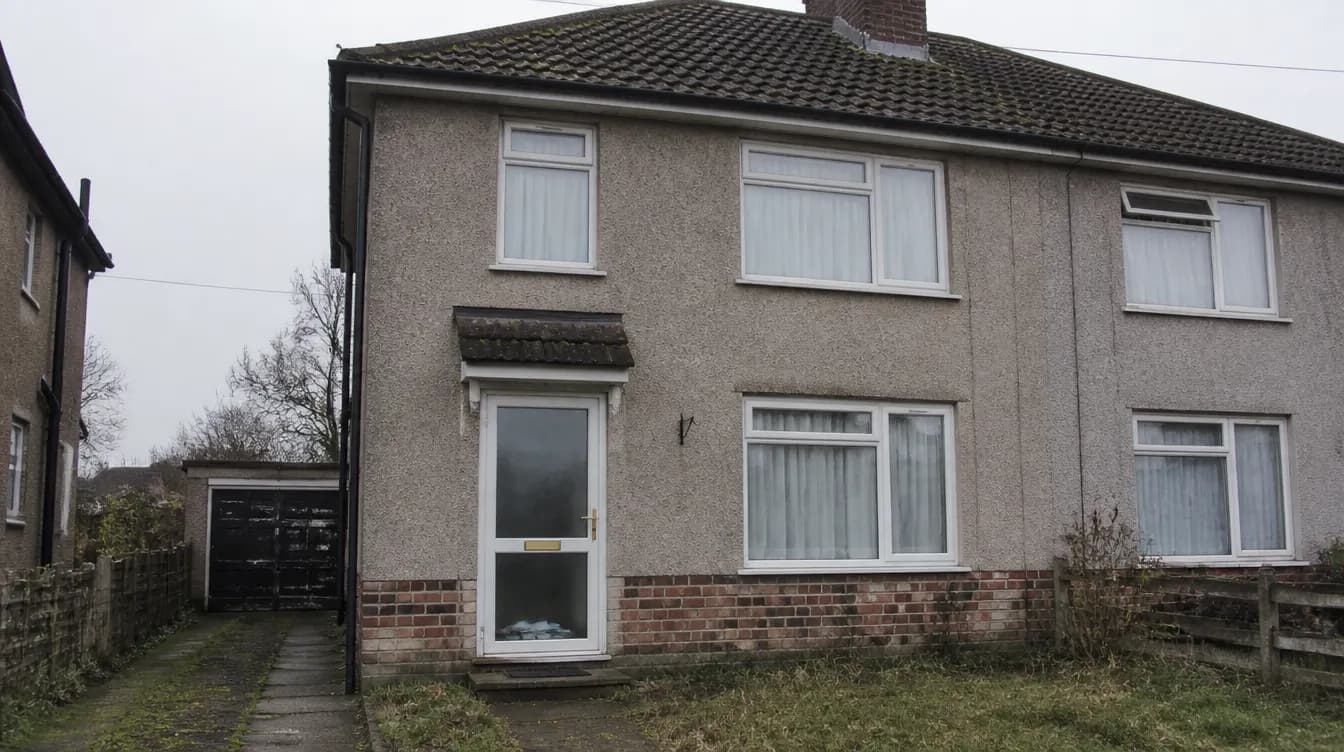
The deputyship application window: Where the property risk actually sits
Four to twelve months sit between a deputyship application going in and the order coming back. The property does not wait.
There is a period on every Court of Protection property file that does not have a name. It begins when the application goes in and it ends when the order comes back. On the current timetable, it lasts somewhere between four months and a year. Nobody puts a clock on it, because for most of that period nobody has the authority to.
The legal commentary on the application backlog has been growing steadily through 2025 and into 2026. The drivers are well known by now. Mayo Wynne Baxter summarised them last autumn: more applications coming in, partly because more local authorities are now required to apply for deputyship after being told they cannot manage private pensions under appointeeship, and a court that is short on staff and triaging complex cases first. The result is a backlog that the practitioner press has been reporting on for the better part of a year.
What the commentary does not address is what happens to the property during that wait. The wait is a procedural problem when you frame it from the legal side. From the operational side, it is something else: a period of active exposure on an asset that nobody yet has clear authority over.
How long the gap is now
The textbook figure is four to six months from filing to order. That figure is still printed on most firms' explainer pages and is broadly correct for an uncontested property and affairs application that goes in clean.
The practitioner experience is longer. Pepperells, writing about their current caseload, put it at six to eight months. Octopus Legacy, in their March 2026 guide, cited up to twelve months in complex cases or during periods of backlog. I have heard worse anecdotally on contested files, though I would not generalise from that.
The structural reason the figure has stretched matters more than the figure itself. The DWP and HMRC position that appointeeship cannot be used to manage private pensions has pushed a category of local authority cases that used to be handled administratively into the deputyship pipeline. These are people in residential care whose pension income has to be managed by someone with legal authority to do so, and the appointeeship route closed for them. The application is now compulsory, and a wave of compulsory applications is what has hardened the backlog.
That matters for the property side because LA cases often involve a property that has already been sitting for some time before the application even gets filed. The capacity loss preceded the realisation that an appointeeship would not cover the pension. The realisation preceded the decision to apply. The application preceded the gathering of the COP3 capacity assessment and the rest of the paperwork. By the time the file goes in, the property has often been empty for months. The deputyship application window is then bolted onto the front of that period, not the start of it.
The property does not wait
The application sits with the court. The property does not.
Most unoccupied property insurance has a vacancy condition that bites at 30, 60 or 90 days, depending on the policy. The trigger is not "when the deputy is appointed". The trigger is when the property became unoccupied, which in practice is usually a date earlier than anyone on the file has formally recorded. If the policy lapses for non-disclosure of vacancy, or moves to limited cover under the vacancy clause, the deputy inherits that position. I wrote about this in the previous piece on the three clocks running on empty probate property; the same clocks run on Court of Protection property, and they run independently of whether anybody has authority to act.
Council tax is the same. The Class I exemption for property left empty by a person now resident elsewhere for the purpose of receiving care is open-ended in principle, but it depends on the local authority being notified, on the basis being documented, and on the basis surviving the LA's periodic review. None of those things happen automatically. The exemption is not lost because the deputyship application is pending. It is lost because nobody filed the form, or nobody answered the review letter, or nobody could prove the property had been continuously unoccupied for the reason claimed.
Then there is the building itself. Heating systems that were last serviced two years ago. Gutters that have not been cleared since the last occupant moved. Locks that have not been changed since the keys were handed to a contractor, a neighbour, a relative or a carer at some point in the previous eighteen months. Gardens that the neighbours are starting to comment on. None of this is dramatic in any single month. It is the accumulation across the application window that becomes the problem.
We have attended properties where the unoccupied insurance had lapsed before the order arrived, where the council tax exemption had been quietly converted to a full charge because nobody answered the review, and where the locks were on the same keys that had been distributed to four different people during the deceased or incapacitated person's last years at home. In every case the deputy was appointed into a position that was already worse than it had been at the date of application.
The limits of an interim order
There is a route through this in principle. Practice Direction 10B governs urgent and interim applications, and the Court of Protection guidance is clear that an interim order can be sought where there is genuine urgency. In financial cases that typically means the release of specific funds for specific decisions: a care home invoice, a deposit, a particular item of expenditure that cannot wait for the substantive order.
This is useful, but it is not a property management authority. The published case studies of successful interim applications describe item-by-item authority, supported by witness evidence and a costed list. An interim order to release £6,000 for furniture and adaptations is one thing. An interim order appointing somebody to hold the property, instruct contractors, deal with the insurer and manage the council tax position over a six-month period is something quite different and is not the usual product of an interim application.
In my view, this is a structural gap. The interim mechanism is designed for one-off welfare-driven decisions. The ongoing custodianship of an empty building does not fit it neatly. The result is that the application window remains, in practice, a period where the property is not under anybody's coordinated authority, even where an interim order has been granted on a narrower point.
What the new deputy inherits
The OPG Deputy Standards apply from the moment of appointment. Standard 5, on property and financial decision-making, is detailed about what is expected of the deputy in the management of property. It is not framed around the question of what happened before the deputy was appointed.
In practice, that means the deputy inherits the position the property is in on day one. An insurer that has moved to vacancy cover, a council tax that has reverted to a full charge, a heating system that failed in the previous winter, a roof tile that came off during the wait: these are the deputy's starting position. The standards then apply forward from there.
I have sat with newly appointed deputies who did not realise, until they had the order in hand and could ask the questions, how much had changed on the property in the six months between filing and appointment. The application window had been treated, by everyone on the file, as a period of waiting rather than a period of risk. The property had been left to itself on the assumption that nothing was happening to it, when in fact a great deal was.
The OPG's increased scrutiny of annual reports, which Mayo Wynne Baxter flagged in the same piece, makes this harder rather than easier. A deputy who inherits a deteriorated position has to explain it. The explanation that "this was the state of the property when I was appointed" is true, but it is not a complete answer to the question of what was done about it from day one.
A stake in the ground
The deputyship application window should be treated as a discrete phase on the file, with its own checklist.
The insurer should be notified that an application is pending and that there is no current authority. The council tax position should be documented and the exemption basis recorded. Key control should be logged, not assumed. The condition of the property at the date of filing should be baselined, with photographs and a written note, so that the deputy on appointment has a defensible starting point rather than an unverifiable one.
Whoever is on the file at the application stage, whether the solicitor preparing the COP1 or the local authority pursuing the order, has a custody interest even without authority. The point is not that they have legal power over the property. The point is that they are in a position to document what is happening to it and to hand a defensible starting position to the eventual deputy. None of that requires an order.
The professional position, I think, is that a property cannot be assumed to look after itself for six months under nobody's watch. The application window is not a pause in the work. It is the most exposed period of the file.
I would be interested to hear from professional deputies, Court of Protection solicitors and local authority officers on this. Whether you recognise the gap from your own files, or whether you have a protocol that handles the application window better than what I have described here. You can find me at [email protected] or on LinkedIn.
At Prospect PS we baseline and monitor properties during the application window because the order does not retroactively fix the months that came before it.

Managing Director, Prospect PS Ltd
David Halliwell is Managing Director of Prospect PS Ltd, a UK property management company working with solicitors, professional deputies, insolvency practitioners, and local authorities. Prospect PS provides end-to-end property management for probate, Court of Protection, insolvency, LPA receivership, and local authority empty homes across England and Wales. Every case is managed in-house to a consistent standard, with all contractors vetted for compliance and security before they enter a property. Reporting is AI-driven, producing a structured, timestamped record from first instruction to final disposal.