
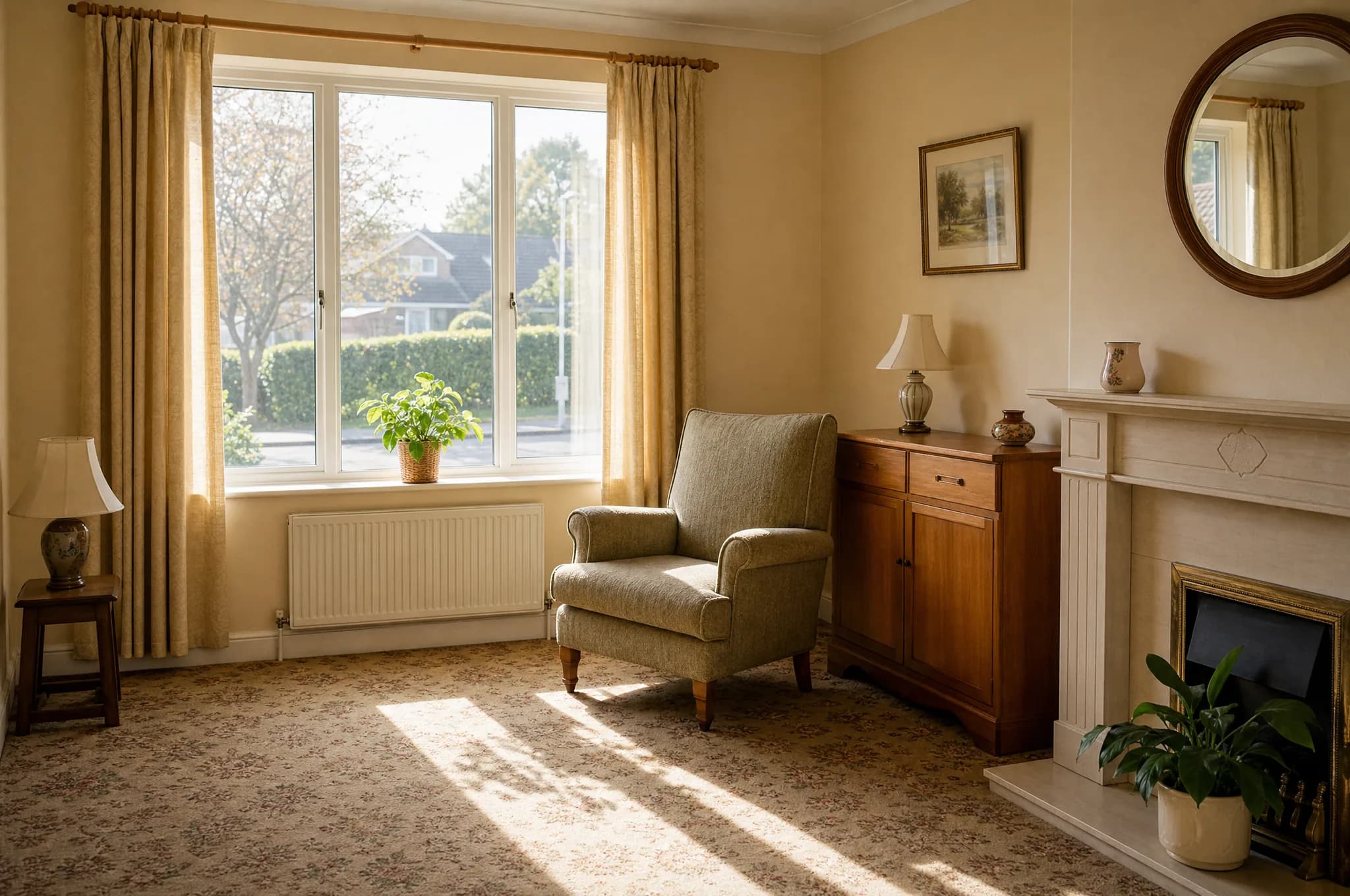
Managing property for a protected party: What a deputyship order actually authorises on the home
The order lands and the first real decision is the protected party's home. It is also the asset where the deputy's authority is narrowest and the protected party's own wishes weigh heaviest.
When a property and affairs deputyship order finally comes through, the first significant decision a deputy makes is almost always about the home. Whether to hold it or sell it. It is the largest asset most protected parties own, and it is the one where their own wishes weigh heaviest. It is also the asset where a standard order gives the deputy the least room to act alone.
There is a reason the Court of Protection is arguing about the limits of a deputy's authority just now, and it is worth property deputies watching even though the case at the centre of it is not about property at all. In Parr v Cheshire East Council & Anor [2026] EWCOP 1 (T3), decided in January, Poole J granted a mother a personal welfare deputyship for her severely disabled adult daughter. He found that, on the facts, the appointment did not restrict the daughter's autonomy. A differently constituted hearing then reached the opposite view on similar facts, and in April the conflict was leapfrogged straight to the Court of Appeal. The question the Court of Appeal has been asked is how far a welfare deputyship of this kind infringes the protected party's right to autonomy.
That is a welfare question, and I want to be careful not to stretch it further than it goes. Property and affairs deputyship sits on firmer ground, and nobody is suggesting the Court of Appeal is about to unsettle it. The tension underneath the case is the same one a property deputy meets on the very first decision. How much of a protected party's own life, including the home they have lived in, can a deputy reorganise in their best interests before best interests has quietly become something the protected party would never have chosen.
What the order actually authorises
Start with the document. The Mental Capacity Act 2005 builds in a preference against deputyship doing too much. Under section 16(4), a decision by the court is to be preferred to the appointment of a deputy, and the powers given to a deputy should be as limited in scope and duration as is reasonably practicable. The principle in section 1(6), that anything done for a person who lacks capacity should be the least restrictive option open, runs through the whole appointment. A deputyship order is drafted against that grain. It is not a general power of attorney handed over after the fact, and it does not assume the deputy can do everything an owner could do.
The home is where this bites. The OPG is explicit in its Deputy Standards that any decision to sell the protected party's property has to be in their best interests and in line with the authority the deputyship order confers, and that the deputy has to keep the property secure and appropriately insured in the meantime. I have sat across the table from a newly appointed deputy holding the sealed order, certain they could put the house straight on the market, who had not noticed that the order in their hand did not say so. The authority to manage the protected party's affairs and the authority to sell their home are not the same grant, and on a standard order the second is often missing.
The instruction-stage check is dull and it is quick. Read the powers the order actually grants. Confirm whether the sale or disposal of the protected party's home is among them, or whether it needs a separate application to the court. Note any conditions the judge has attached. Establish whether the protected party could realistically return to the property, because that single fact moves the best-interests analysis more than any valuation will. None of that takes long. Skipping it is what takes long, later.
Best interests is more than the sensible commercial call
Where the order does authorise a sale, best interests under section 4 is not a box to tick on the way to completion. The deputy has to take account of the protected party's past and present wishes and feelings, and section 4(6) names that obligation in terms. A house that makes no financial sense to keep can still be the place the protected party expects to go back to, or the last fixed point they have left. I do not raise that to argue against ever selling. Most of the time a sale is the right call and the money is needed for care. I raise it because the reasoning has to be on the file, and the wishes have to be weighed in it, before the board goes up at the gate. I have written separately about what best interests looks like on the ground when a clearance turns up something nobody planned for, and the same discipline applies to the house itself. Selling the home of someone who might recover capacity, or who is settled on going back, is the property version of the question the Court of Appeal is now chewing over.
The property does not wait for the decision
None of this happens quickly, and the property does not pause while the deputy gets it right. I wrote in an earlier piece in this series about the four to twelve months that can pass between a deputyship application going in and the order coming back, with the property exposed the whole time. The order does not end that exposure. It transfers it to the deputy, who now carries the OPG standard to keep the property secure and insured from the day they are appointed, including the weeks or months they spend properly working out the home decision. An empty house with an unknown number of keys in circulation is not secure, whatever the buildings policy says, and I have set out the key control and security position for professional appointees on its own elsewhere. For a deputy the point is narrower. The duty to maintain and secure runs from appointment, not from the day the best-interests decision is finally made.
Where the home decision belongs
When the home decision is finely balanced, or the family is split on it, the deputy is not obliged to be the one who decides. Section 16(4) points the other way. The court would rather take that decision itself than watch a deputy stretch a general authority to cover it. Going back to the court for a specific order on the sale of the home reads the deputy's role cautiously rather than stretching it, and it is a great deal cheaper than defending the decision after the event. We have held the keys to a protected party's house for the best part of a year while exactly that question was put back to the court and answered properly. The property stayed secure and insured throughout, which was the part the deputy could control while the decision sat where it belonged.
A stake in the ground
A deputyship order is not a free hand over the protected party's home. At instruction stage the deputy's first job is to read the limits of their own authority before they exercise it, because the home is the asset where best interests and the protected party's own wishes pull hardest against each other, and it is the asset a standard order is most likely to hold back. Acting first and checking the order later is how a defensible best-interests decision becomes a contested one. The property can be secured and insured from day one. The decision about whether it is sold can wait for the authority to be confirmed and the reasoning to be written down.
I would be interested to hear from professional deputies and the solicitors instructing them on this. Whether you recognise the gap between the order landing and the first decision about the home from your own files, or whether you have a protocol at instruction stage that handles it better than what I have described here. You can find me at [email protected] or on LinkedIn.
At Prospect PS we treat the protected party's home as a held position from the day of instruction, secured and maintained while the deputy works out what the order allows, because the property should not be the thing that deteriorates in the time it takes to make the decision properly.

Managing Director, Prospect PS Ltd
David Halliwell is Managing Director of Prospect PS Ltd, a UK property management company working with solicitors, professional deputies, insolvency practitioners, and local authorities. Prospect PS provides end-to-end property management for probate, Court of Protection, insolvency, LPA receivership, and local authority empty homes across England and Wales. Every case is managed in-house to a consistent standard, with all contractors vetted for compliance and security before they enter a property. Reporting is AI-driven, producing a structured, timestamped record from first instruction to final disposal.