
Reasonable steps, unreasonable risks: Contractor liability on probate property in 2026
What happens when a contractor instructed on a probate property causes damage and walks away? The legal, regulatory and insurance position for executors, deputies, and the firms instructing them.
A question for probate solicitors. If a contractor you have instructed on an estate property causes thirty thousand pounds of damage, who pays? On paper, the contractor. In practice, that depends entirely on whether the contractor exists in any insurable sense at all. In our experience, most weeks of the year, they do not.
This is a gap solicitors did not create and are not paid to police, but the one they end up sitting in by default. It gets worse every winter.
What happened last February
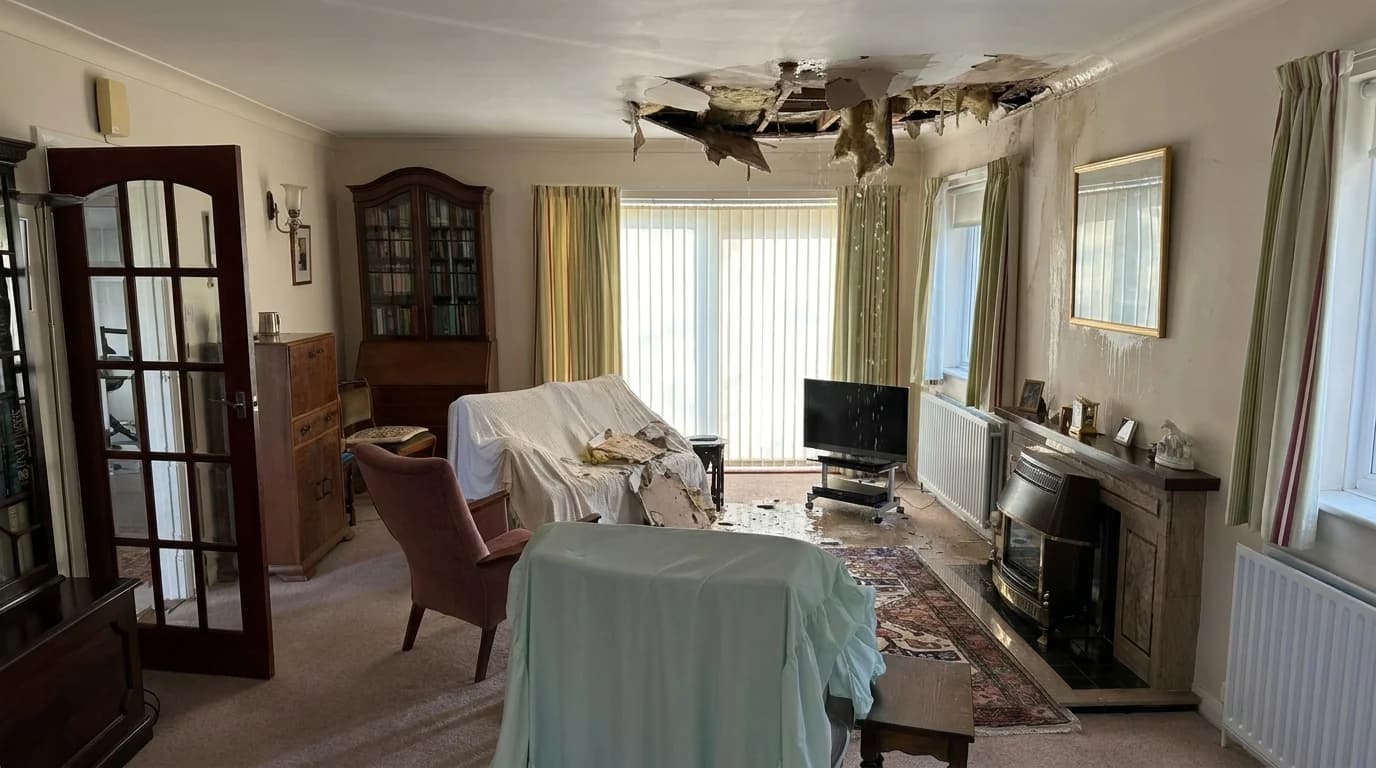
We were called out to a probate property in a market town in the South East. By the time we got there, the upstairs of the house had flooded the downstairs from the inside, and the bill ran north of £30,000.
A previous contractor, instructed in good faith by the appointed solicitor, had been asked to isolate the services. He drained the hot water cylinder. He did not drain the central heating system, and he did not drain the radiators. The first hard freeze of the season cracked a pipe in an upstairs bedroom. The thaw did the rest.
The contractor was a general handyman with no plumbing qualifications and, when it mattered, no relevant insurance. He walked away. The estate did not get to.
I want to be careful here, because the audience for this piece is the audience for whom it is most uncomfortable to read. The previous solicitor did nothing the industry would currently call wrong. He instructed a contractor to do a job that, on the face of it, the contractor could do. The handyman drained the hot water, which is what he was asked to do on a literal reading. Nobody was negligent in the sense anyone usually means it. And yet the estate is £30,000 down, the insurance position is contested, and somebody is going to write a letter about it.
So the question is not "who got it wrong". The question is how the previous solicitor was supposed to know. Under current industry practice, the honest answer is that he was not.
The legal and regulatory picture
Three duties sit underneath this, and they all point in the same direction.
The executor's duty. The duty of an executor to preserve the value of the estate is well established and personal. Where the property is the largest single asset in the estate, which it usually is, the duty bites hardest there. UK probate insurers are consistent on the point: an executor who fails to take reasonable steps to maintain and insure the property can be personally liable for the loss. That is not a niche position from one broker. It is the standard line across the unoccupied probate insurance market, and it reflects the underlying law accurately.
The deputy's duty. For property held under a Court of Protection deputyship, the position is, if anything, more explicit. The OPG's Deputy Standards, refreshed in February 2023, require that P's property is kept secure and maintained, and that appropriate buildings and contents insurance is in place. A professional deputy who instructs an unverified contractor on P's property, and that contractor causes damage, has a regulator-facing exposure on top of the underlying civil position. The OPG audits against the standards. Significant breaches can result in removal.
The solicitor's position. This is the most carefully worded paragraph in the piece, because I do not want to overclaim. The SRA does not require solicitors to vet a plumber's credentials. What it does require, under the Code of Conduct, is that where solicitors supervise or manage others providing services, they remain accountable for the work carried out through them, and ensure those individuals are competent. The SRA's 2024 Thematic Review on Probate and Estate Administration is worth reading. It makes clear that probate and estate administration is the third highest category for complaints to the regulator, and one of the largest categories for payments from the Compensation Fund. The regulator is paying attention. The direction of travel is more rigour on third-party arrangements, not less.
None of this turns the firm into the insurer of last resort for the trade. It does mean the standard of "reasonable steps" expected of executors and deputies is rising, and the firms acting for them are increasingly expected to operate inside that standard rather than outside it.
The regulatory gap nobody talks about
When I explain the next part to solicitors, the reaction is usually one of surprise.
In the United Kingdom, plumbing work is not a regulated activity. There is no licence. There is no register. There is no minimum qualification. A person with no training and no certificate can lawfully be paid to drain a domestic heating system. The only material exceptions are gas work, which requires Gas Safe registration, and certain electrical work, which falls under Part P. Everything else, including the work that flooded the property at the start of this piece, is governed by nothing more rigorous than market trust.
Plumbers should be NVQ Level 2 qualified, or hold the older City and Guilds equivalent. They should be members of the Chartered Institute of Plumbing and Heating Engineering, or the Association of Plumbing and Heating Contractors. They should carry public liability insurance at a level appropriate to the value of the buildings they are entering. None of this is mandatory. All of it is voluntary. The protections in this market are the ones individual tradespeople choose to acquire and to maintain.
That is fine, in its way, for the domestic homeowner who is on site and bears the consequence personally. It is not fine for an unoccupied probate property, where the consequence falls on a third party who could not have inspected the work and could not have known the contractor was unqualified.
This is where the insurance bites back. Standard unoccupied property policies impose strict winter conditions. Either the heating must be maintained at a continuous minimum temperature, typically 13 to 15 degrees, or the entire water system must be drained down. Inspections must be logged, usually monthly. Failure to comply does not just reduce the claim; it voids the relevant peril entirely. One typical insurer's wording is unambiguous: if you fail to comply with any part of this clause, claims relating to escape of water "will be void and not paid".
The February case fell into the worst of both worlds. The heating was off. The system was partially drained, but not fully. The policy, on a literal reading of the conditions, was not satisfied on either limb. The handyman created two losses rather than one: the physical damage, and the loss of the insurance recovery that would otherwise have covered it.
On scale: the Association of British Insurers reports that UK insurers pay out approximately £1.8 million per day in escape-of-water claims. The average burst pipe claim runs around £7,000. During the cold-weather peak of 2011, insurers were taking more than 3,500 burst pipe claims a day. This is a mainstream loss event rather than a tail risk, and unoccupied probate property is the worst-case version of it.
This is only the plumbing example. We have attended properties where the locks were never changed after the deceased's death, or were changed for non-British-Standard locks that void the policy on their own, or had keys distributed to neighbours without any record of who held them. We have attended properties where the slate had slipped six months earlier and nobody had been back to check, until a slate came off above a public footpath. We have attended properties where pest control was never instructed, the rats moved on to the neighbours, and the local authority got involved. Each of these is a different category of failure. They all land in the same lap. I have written about the insurance, council tax and security timelines in more detail in the companion piece to this article.
What reasonable steps actually look like
Reasonable steps, on an unoccupied probate property in 2026, are not what the industry has historically treated as reasonable. The bar has moved, even if nobody has quite said so.
In our view, the work breaks down roughly as follows.
Qualifications need to be verified against the issuing body, in date, and appropriate to the task. NVQ Level 2 or equivalent for plumbing. Gas Safe for anything touching gas. Part P for electrical work. Asbestos awareness for any clearance work in older properties. "The contractor said he was qualified" does not count.
Public liability insurance needs to be verified and scaled to the value of the property. Two million pounds of cover is the industry default, and it is not enough on a property worth half a million, let alone a million. The cover needs to match the building the contractor is being asked to enter.
Waste carrier registration needs to be verified for any clearance work, against the Environment Agency register, active and in date.
Enhanced DBS is needed where the property contains chattels, jewellery, financial documents, or anything of personal significance to a vulnerable person or a deceased estate.
Vetting needs to be continuous, not a one-off check. A contractor vetted three years ago and never re-checked is, for practical purposes, not vetted now. Policies expire. Certificates expire. Trade body memberships fall away if the subscription is missed. The work of vetting is the work of re-vetting.
The scope of work needs to be written down and signed. "Isolate services" is not a scope of work; it is the start of an argument. "Fully drain the hot and cold water systems, the central heating circuit, and all radiators; verify by opening each drain point in turn; photograph the empty system; provide a written confirmation" is.
We operate to this standard at Prospect because we believe it is the only standard that will hold up if a property does flood, or a contractor does injure himself on site, or a beneficiary does start asking where the keys went. Across our own contractor onboarding, around one in five applicants fail. Most fail on insurance or on enhanced DBS. Some fail on qualifications they claimed to hold and did not. None of them would have been spotted on a phone call.
A stake in the ground
Until "reasonable steps" has a working definition in this context, every probate property is one cold snap away from becoming a professional negligence file. That is the position I am working from, and I think it is defensible.
The trade itself is the cheapest part of any estate administration. The gap between "someone who'll do it" and "someone who knows what they're doing" is the expensive part. Right now, the industry sits in that gap by default, and the firms instructing the work absorb a risk they should not have to carry alone.
In my view, this is overdue for a proper standard. Not necessarily a regulator-imposed one. The trade is unlikely to be licensed in our lifetimes. But an industry standard, of the kind that emerges when enough professional firms decide "we did what everyone else does" is no longer a defence, is well within reach. The technology to support it exists. The data sources to verify against exist. What is missing is the willingness to make it the default, instead of the differentiator.
I would be interested to hear from solicitors and deputies on this. Whether you recognise the problem from your own files, or whether you have a framework that handles it better than what I have described here. You can find me at [email protected] or on LinkedIn.
At Prospect PS we operate to a continuous-verification model because we think it is the only model that will stand up under pressure.

Managing Director, Prospect PS Ltd
David Halliwell is Managing Director of Prospect PS Ltd, a UK property management company working with solicitors, professional deputies, insolvency practitioners, and local authorities. Prospect PS provides end-to-end property management for probate, Court of Protection, insolvency, LPA receivership, and local authority empty homes across England and Wales. Every case is managed in-house to a consistent standard, with all contractors vetted for compliance and security before they enter a property. Reporting is AI-driven, producing a structured, timestamped record from first instruction to final disposal.