
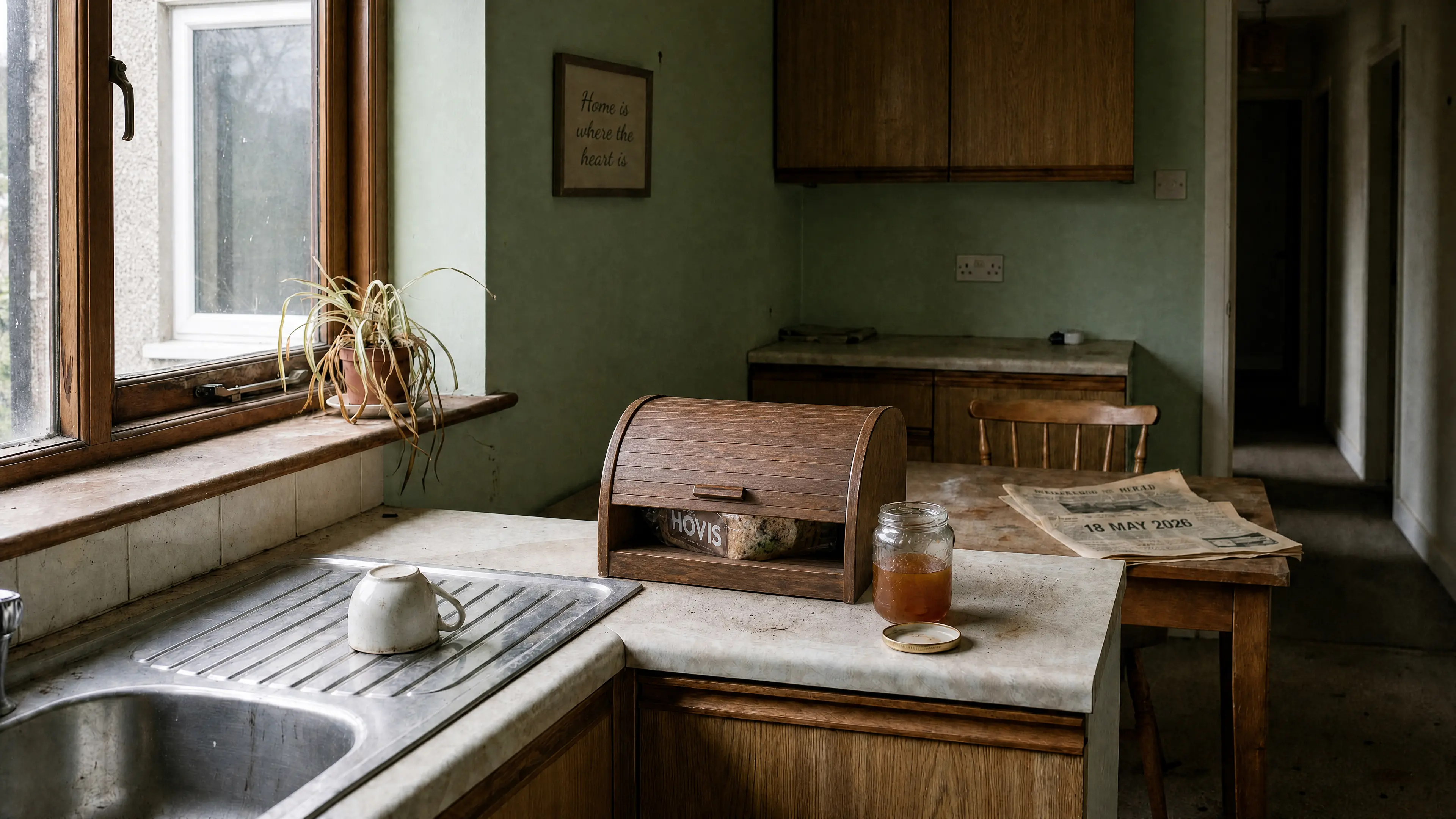
Pest control and probate property: The liability under the 1949 Act most executors aren't thinking about
Under the Prevention of Damage by Pests Act 1949, the person controlling a vacant property must report substantial rodent activity. For probate estates, that person is the executor.
Pest control is not on most executors' minds when a probate property falls vacant. It rarely makes the list at all until something becomes visible, and by then the risk has usually already landed somewhere it should not have.
Under section 4 of the Prevention of Damage by Pests Act 1949, the occupier of land has a duty to notify the local authority if they know that rats or mice are living on, or resorting to, the land in substantial numbers. The occupier, for these purposes, includes whoever is in control of the property. For a probate estate, that is the executor, or the professional appointee acting on their behalf. The duty is not conditional on a recent visit. It runs from the point at which the executor knows, or ought reasonably to know, that there is a problem.
Local authorities have enforcement powers that sit alongside the duty. Where a property is the source of an infestation affecting neighbouring land, the authority can require the person responsible to take specified action, and non-compliance is a criminal offence. The statutory nuisance framework under Part III of the Environmental Protection Act 1990 sits behind this and gives the authority broader powers where the infestation is prejudicial to health or a nuisance to neighbours.
A vacant probate property is the sort of environment this legislation was written for. Food left in the kitchen at the time of death. An overgrown garden. Structural gaps that were tolerable while somebody was in the house every day and become entry points the moment nobody is. Infestations in vacant properties develop faster than in occupied ones, and they get detected later. By the time a neighbour calls the council, the infestation has often been running for weeks.
The executor is the person on the notice. Whether they caused the problem is beside the point. The question that gets asked is what they did to find it and deal with it.
The insurance angle is a different question
Most vacant property policies exclude damage caused by insects and vermin, and the exclusion is standard enough that challenging it is rarely productive. The live insurance question for pest risk is upstream of that: whether the executor can show they inspected the property to a standard that would have surfaced the problem in time. A structured record of attended visits that includes a pest and condition assessment is the evidence that answers when an insurer or beneficiary asks.
I wrote about the insurance position on empty probate property in the previous piece in this series. The same principle applies here. Specialist probate insurance in place from day one is the baseline, but a policy only responds if the inspection regime behind it is real. Pest risk is one of the things an inspection should be catching, and in most cases it is not.
What adequate oversight actually involves
Attended visits to a vacant property should include a pest assessment as standard. That means looking for rodent activity and the conditions that draw it in, alongside any signs of insect infestation. Where anything shows up, the action taken and the outcome belong in the record next to the observation. This is the basic content of competent property management for a vacant estate.
The friction is twofold: somebody has to physically attend with the right questions in mind, and they have to capture what they find in writing that will hold up later.
I wrote in the contractor liability piece about the gap between instructing someone and verifying they are competent to do the work. The same logic applies to pest management. A property visited monthly by someone who does not know what rodent activity looks like is not a property being monitored for pest risk. It is a property being visited.
In my experience, the way most estates handle pest risk reflects an assumption that infestations are dramatic events that announce themselves. They are not. They build up quietly, and they are usually discovered by the neighbour rather than the executor. By which point the executor has already failed the test the statute sets.
A stake in the ground
Pest risk on a vacant probate property is statutory, not optional. The duty under the 1949 Act sits on the person in control of the property, and for an estate under administration that is the executor. The enforcement powers available to local authorities are real, and the overlap with Part III of the Environmental Protection Act 1990 means the authority has more than one route to the same door.
The practical answer is the same one that applies to every other risk on an empty probate estate: attended inspections, conducted by someone who knows what they are looking at, logged in a format that will hold up if anyone asks later. That is not a high bar. It is the minimum.
I would be interested to hear from solicitors and deputies on this. Whether pest risk is something your file-opening procedures address, or whether it sits in the same unmanaged space I see across most of the estates we take on. You can find me at [email protected] or on LinkedIn.
At Prospect PS we include pest assessment in every attended inspection because statutory duties do not wait for somebody to notice the problem.

Managing Director, Prospect PS Ltd
David Halliwell is Managing Director of Prospect PS Ltd, a UK property management company working with solicitors, professional deputies, insolvency practitioners, and local authorities. Prospect PS provides end-to-end property management for probate, Court of Protection, insolvency, LPA receivership, and local authority empty homes across England and Wales. Every case is managed in-house to a consistent standard, with all contractors vetted for compliance and security before they enter a property. Reporting is AI-driven, producing a structured, timestamped record from first instruction to final disposal.