Two deputies, one home: Where authority over a protected person's house splits after Re HB
The Court of Appeal has made welfare deputies easier to appoint. Where one deputy decides where the protected person lives and another pays for the house, the file has to show whose decision was whose.
The parents in Re HB already held their son's property and affairs deputyship when they took his case to the Court of Appeal. They managed his money. What they did not hold, and what the Court of Protection had refused them, was the authority to decide where and with whom he lives. On 24 July the Court of Appeal gave it to them in principle, and in doing so made personal welfare deputyship easier to obtain than it has been for most of the life of the Mental Capacity Act.
Most of the commentary on it has come from welfare lawyers. I want to look at it from the other side of the file, because on most deputyship cases the two halves of the authority the HB parents now hold sit with different people. One deputy decides where the protected person lives. Another holds the house, insures it, pays for it and, if the order allows, sells it. The home is where the two authorities meet, and after Re HB there will be more files where they do.
What the Court of Appeal decided
Re HB (Appointment of Personal Welfare Deputy) [2026] EWCA Civ 960 concerned a young man of 22 with profound autism and a severe learning disability, whose parents had spent years challenging public bodies to get him the schooling and support he was entitled to. The Court of Protection refused to appoint them as his welfare deputies, pointing to a history of the parents and the public bodies deciding things together, and to the view that major decisions such as residence were for the court. Sir Stephen Cobb, with King LJ and Nugee LJ agreeing, allowed the appeal unanimously and sent the application back to a Tier 2 judge to settle the scope and duration of the order.
The judgment does not create a presumption in favour of welfare deputies. What it removes is the idea that an applicant has to show exceptional circumstances. The court describes a spectrum, with daily care at one end and decisions only a court should make at the other, and a centre ground where a deputy may be the right answer. At paragraph 63 it lists the features that point that way: a special relationship between the applicant and P, a need to give effect to P's own wishes and values, an anticipated stream of decisions rather than a single one, the move from children's to adult services, a public body that has failed to apply the Act properly, and a need for decisions to be prompt. It also saw something to be said for time-limited orders for the parents of young adults in transition.
Bevan Brittan and others expect applications to rise, particularly from the parents of young adults with lifelong impairments and from families who have had to fight an authority for years. I think that is right, and I think the rise will arrive on the desks of property and affairs deputies who were not party to any of it.
The two halves of the authority
The Act keeps the two halves apart. Section 17 lists the welfare powers the court can confer, and the first of them is deciding where P is to live. Section 18 lists the property powers, starting with the control and management of P's property and its sale, exchange, charging, gift or other disposition. The same person can hold both, as the HB parents now will, but the order has to say so. Professional deputies and local authority deputyship teams hold property and affairs orders in their thousands. Welfare orders are rarer, and until July they were hard to get.
The OPG's guidance on Re ACC, published on 9 January this year, draws the property deputy's line tightly. General authority covers the ordinary day-to-day tasks of administering the estate. Selling or letting the home is an additional clause, and a deputy who does either without it acts at their own personal risk. I wrote earlier this year about how narrow the deputy's authority on the home actually is, and nothing in Re HB widens it. The Court of Appeal noted in passing that there is no equivalent of section 5 for property and affairs. A carer can make a welfare decision for someone who lacks capacity and rely on section 5 for its lawfulness. Nobody can pay for a new roof on that basis.
The OPG's own numbers show how much property sits under this split. Its annual report for 2025 to 2026 records 64,456 deputyships at the end of March, up 5.6% on the year, with orders received up 6%. In the same year the OPG commissioned 10,647 visits, down from 12,388. More deputyships, and fewer eyes on the ground. The Court of Appeal also recorded that welfare orders tend to run for over seven years, against about five and a half for property and affairs.
Where the two halves meet
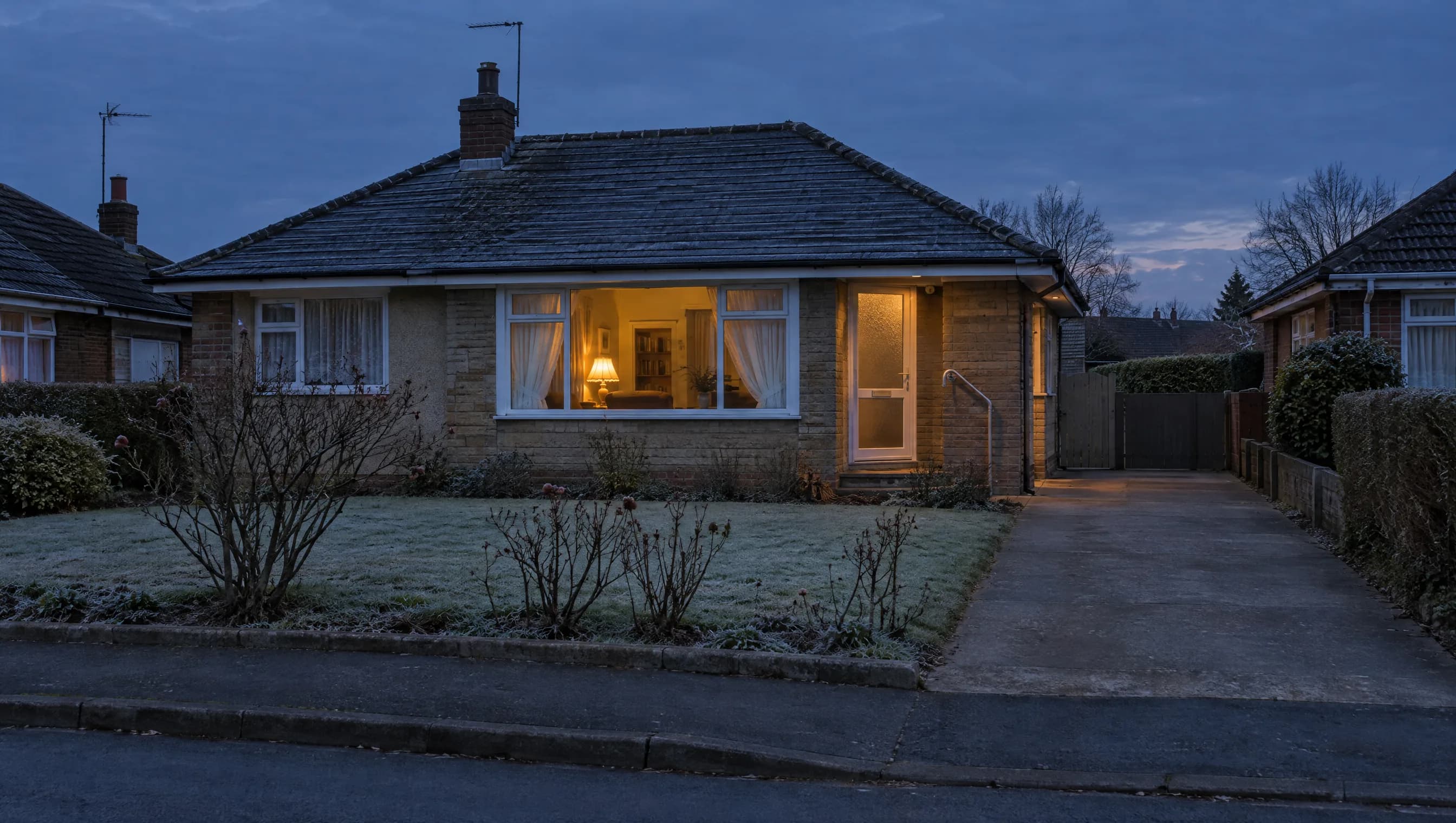
Take the ordinary case. The protected person is in a placement and their house is standing empty. The welfare deputy, who after Re HB may well be a parent, takes the view that the placement is temporary and that P is coming home. The property and affairs deputy, who may be a solicitor or a council, is paying for a house nobody is living in.
The property deputy's duties do not change because the residence decision was someone else's. Deputy Standard 6a requires the property to be secure and appropriately insured. Standard 6b requires any sale to be in P's best interests. Standard 5b requires an explanation in the annual report for every significant financial decision. A house held for P's return is a different proposition from a house held pending sale, and the difference shows up on the statement. One is heated through the winter, insured as a home P will come back to, kept in a state P can live in, and visited often enough to know that it still is. The other is drained down and insured as unoccupied, with money spent on it only to protect its value. The property deputy is choosing between those two regimes on the strength of a decision they did not make and may not agree with.
Now the welfare deputy's side. Standard 7a requires a welfare deputy to explain to the OPG any decision about where P should live. So two deputies are reporting to the same regulator about the same house, one explaining why P is going home and the other explaining why the house has cost what it has cost. I wrote in the previous piece in this series about the OPG's tool that reads every line on a bank statement before an investigator does, and about property spend being the exposed category because it is lumpy and paid to trades. On a split file it is more exposed still, because the explanation for the spend sits on someone else's file.
We have attended houses where the family were certain the person was coming home, the care plan said otherwise, and the deputy paying the heating bill had been told neither. Nobody had done anything wrong. The file simply had no record of whose decision the house was waiting on.
When the two deputies disagree
The harder case is disagreement, and Re HB makes it more likely. One of the features the Court of Appeal named at paragraph 63 is a public body that has failed, or threatened to fail, to apply the Act properly. The parent who wins a welfare deputyship on that ground may find that the same local authority is P's property and affairs deputy. The welfare deputy says P is coming home. The council holding the house has a view on whether that is realistic and a duty to spend P's money in P's best interests. Neither of them can simply overrule the other, because neither order reaches across the line.
The Act's answer is section 16(4). A decision by the court is to be preferred to the appointment of a deputy, and a deputy's powers are to be as limited as is reasonably practicable. Where the two halves pull against each other on the home, the question goes back to the court, and in my experience it goes back faster and cheaper when both deputies have written down what they decided and why before the disagreement started. Standard 8d, which requires a deputy to tell the OPG about concerns over another deputy regardless of type, was written for exactly this. I want to be careful here. Most split files never get near a dispute. The ones that do are the ones where the file matters.
What the property file has to show
Where the residence decision and the property decision belong to different people, the property deputy's file has to carry four things it did not need when both decisions were theirs. The welfare deputy's decision on where P lives, in writing, with its date and reasoning, so the property deputy is not holding a house on the strength of a phone call. The property deputy's own decision on what that means for the house, whether it is held for P's return, held for sale, held while the court decides, or held because nobody has yet decided, with the section 4 best interests reasoning attached, including P's own wishes about the home. The evidence of condition at each point the regime changed, which means dated photographs and an inspection record rather than an assertion that the house is fine. And the date each decision was revisited, because the Court of Appeal has made room for time-limited welfare orders and a decision that P is coming home has a shelf life.
None of that is new law. It is the discipline the supervision overhaul already expects of every property deputy, applied to a file where the deputy no longer owns every decision on it.
A stake in the ground
Where a welfare deputy and a property and affairs deputy both hold authority over the same home, the property file has to record which decision belonged to whom, because the OPG will ask each of them separately. The welfare deputy will be asked why P was going home. The property deputy will be asked why the house cost what it did. A file that can only answer one of those questions is, in my view, half a file, and Re HB means there will be more of them.
I would be interested to hear from Court of Protection solicitors and professional deputies on this. Whether you recognise the split file from your own caseload, or whether you have a protocol between welfare and property deputies that handles the home better than what I have described here. You can find me at [email protected] or on LinkedIn.
At Prospect PS we record whose decision put a protected person's house on hold and whose decision keeps it there, because a payment on the account is only as defensible as the decision behind it.

Managing Director, Prospect PS Ltd
David Halliwell is Managing Director of Prospect PS Ltd, a UK property management company working with solicitors, professional deputies, insolvency practitioners, and local authorities. Prospect PS provides end-to-end property management for probate, Court of Protection, insolvency, LPA receivership, and local authority empty homes across England and Wales. Every case is managed in-house to a consistent standard, with all contractors vetted for compliance and security before they enter a property. Reporting is AI-driven, producing a structured, timestamped record from first instruction to final disposal.