
What the vacancy clock actually costs an insolvency practitioner
An empty property in an insolvency estate is not a paused asset. The running costs, the council tax asymmetry between bankruptcy and liquidation, and the value that leaks out of the file while the process runs.
A question for insolvency practitioners. What is the empty property on your current appointment costing the estate each month it does not sell?
Most files cannot answer that with a number. The insurance premium is in there somewhere, paid and forgotten. The council tax position depends on facts nobody has checked since the appointment. The condition of the building is whatever it was on the day someone last had a reason to attend. The costs are real, they are running, and they are scattered across the file in a way that means no one ever sees them as a single figure. The realisation, when it comes, gets judged against the debt. It rarely gets judged against what the waiting cost.
I think it should be. Because on the appointments we attend, the waiting is often the most expensive part of the case.
The clock starts before the appointment
By the time an IP is appointed, the property has usually been emptying for a while. A company that stops trading stops occupying. A bankrupt who knows the petition is coming has often already gone. So the vacancy clock is rarely at zero on day one of the appointment; the thirty-day line that standard buildings insurance draws around unoccupancy may already be behind the property, and the cover may already have narrowed without anyone holding the policy knowing it.
I went through the mechanics of unoccupied cover in an earlier piece in this series: the conditions that come with it, the inspection regimes it requires, the drain-downs it assumes. The point for an IP is simpler. The insurance position the estate inherits is usually worse than the file thinks it is, and the gap between what the policy says and what the property's actual occupancy history supports is a claim-time problem that lands on the office holder.
The council tax asymmetry
Council tax is where the cost of vacancy splits sharply depending on what kind of appointment you hold, and the split is not widely priced in.
If the property is held by a trustee in bankruptcy, the position is generous. Class Q of the Council Tax (Exempt Dwellings) Order 1992 exempts an unoccupied dwelling where the person who would be liable is a trustee in bankruptcy, furnished or not, for as long as the conditions hold. The exemption exists precisely so that the charge does not eat the estate before the creditors see it.
A company in liquidation gets no equivalent. There is no Class Q for a liquidator or a receiver holding a residential property, so the dwelling is chargeable from the start. And since April 2024 the exposure has teeth: under the changes brought in by the Levelling-up and Regeneration Act 2023, councils can apply an empty-homes premium of up to one hundred per cent once a dwelling has been empty and substantially unfurnished for twelve months, rising to two hundred per cent at five years and three hundred per cent at ten. The government's own guidance carves out an exception while the property is being actively marketed for sale, but that exception is capped at twelve months. A property that has been sitting in a slow insolvency process for two years before marketing starts can arrive at the premium with the exception already spent.
Two office holders, two properties on the same street, radically different council tax outcomes. The difference is not the property. It is the statutory route by which it arrived in the estate, and whether anyone on the file checked which side of the line the case sits on.
Condition is the cost nobody books
The running costs at least appear in the cash book eventually. The cost that never appears anywhere is what happens to the realisation while the property waits.
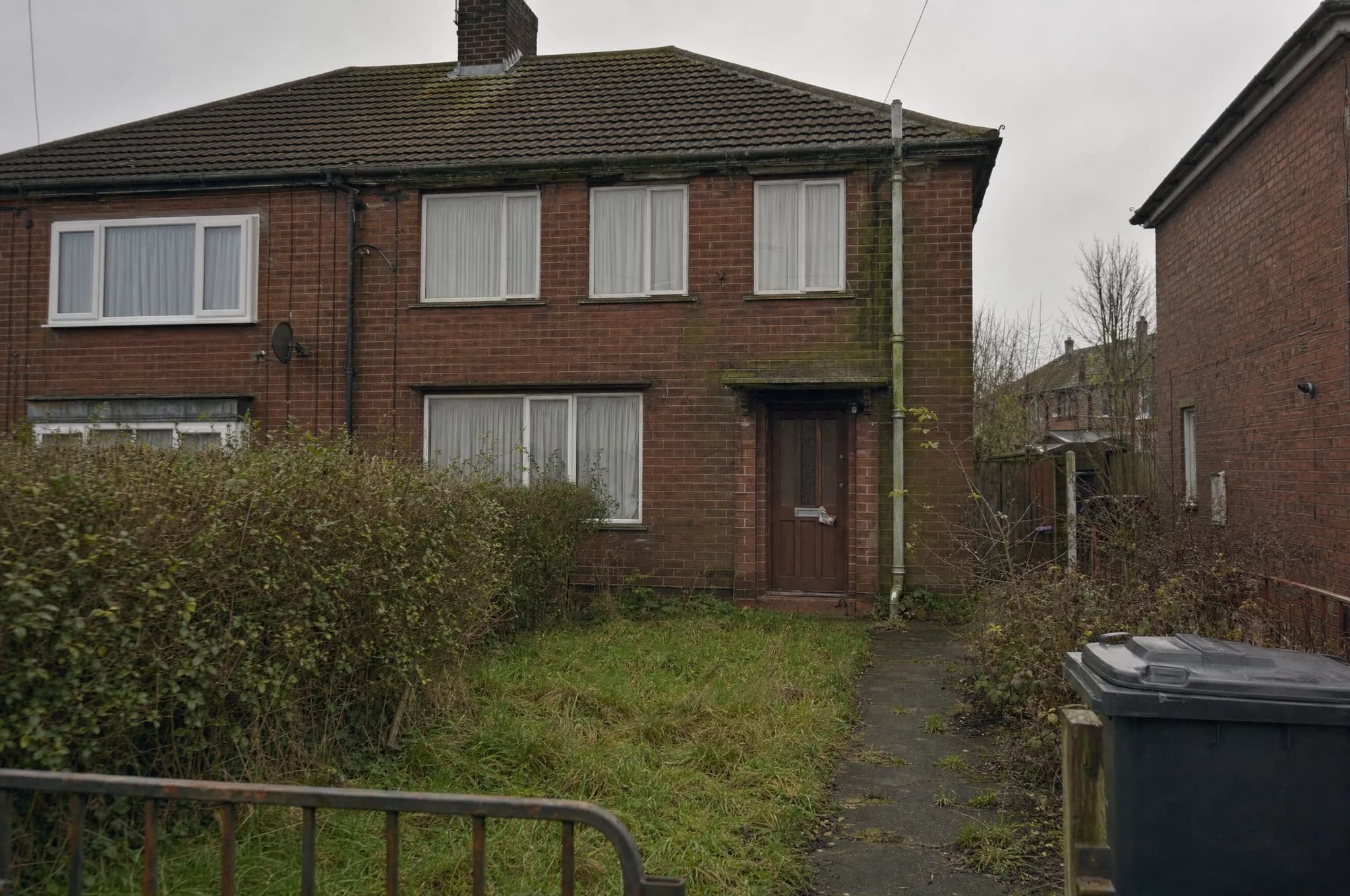
We have attended properties on insolvency appointments where the garden had not been touched since the company stopped trading. Grass to the windowsills, circulars wedged in the letterbox, a wheelie bin that had stood at the gate through two collection cycles. The street knew the house was empty long before any creditor did. That is a security problem, because an obviously empty house is the one that gets the broken window. But it is also a price problem. A buyer viewing a property that announces its own abandonment opens negotiations from a different place than a buyer viewing a house that has plainly been kept.
I wrote in the previous piece in this series about the duty on a mortgagee or receiver to take reasonable care to obtain the true market value at the point of sale, and the same logic runs through an IP's duty to realise assets for the benefit of creditors. The value the estate eventually receives was not fixed on the day of appointment. It moved, month by month, with the condition of the building, and the file usually has no entry recording the movement because nobody was measuring it.
What the disclaimer regime admits
There is a back door in the legislation, and its existence tells you something. Under section 315 of the Insolvency Act 1986 a trustee in bankruptcy can disclaim onerous property, and the statute defines that to include property which may give rise to a liability to pay money. Liquidators have the equivalent power. Parliament built an eject button into the insolvency regime because it understood that holding property can cost an estate more than the property returns.
For a dwelling with equity in it, disclaimer is almost never the answer, and I am not suggesting it should be. The point is narrower. The legislation itself prices vacancy as a liability serious enough to justify abandoning an asset outright. The same liability is running on every property the estate chooses to keep. Keeping it is usually right. Keeping it without managing it is the expensive middle option that the statute never contemplated.
Pricing the clock
In my view, the discipline that is standard on the debt side of an insolvency file needs to exist on the property side. Every estate accounts for interest accruing on secured debt to the day of realisation. Almost none accounts for the cost accruing on the property over the same period: the premium on conditional cover, the council tax and any premium loading, the security measures, the drift in achievable price as the building visibly empties. Those numbers exist. They are just never added up against the realisation, so the cheapest-looking strategy, which is to leave the property alone until the sale, never has to defend itself against what it actually costs.
A monthly holding figure on the file changes the conversation. It turns "we will market it when the process allows" into a decision with a price attached, and it gives the office holder an answer when a creditor eventually asks what two years of waiting cost. Most weeks, in our experience, nobody on the file can say.
A stake in the ground
An empty property in an insolvency estate is not a paused asset. It is a running cost attached to a deteriorating value, and both move every month whether or not anyone is watching. The file should carry a holding figure for the property from the day of appointment, reviewed the way accruing interest is reviewed, because creditors are paying the vacancy clock whether the estate accounts for it or not.
I would be interested to hear from insolvency practitioners on this. Whether you recognise the unmeasured holding cost from your own appointments, or whether your firm has a way of pricing vacancy into the realisation strategy that does it better than what I have described here. You can find me at [email protected] or on LinkedIn.
At Prospect PS we put a number on the vacancy clock at instruction, because an estate cannot manage a cost it has never measured.

Managing Director, Prospect PS Ltd
David Halliwell is Managing Director of Prospect PS Ltd, a UK property management company working with solicitors, professional deputies, insolvency practitioners, and local authorities. Prospect PS provides end-to-end property management for probate, Court of Protection, insolvency, LPA receivership, and local authority empty homes across England and Wales. Every case is managed in-house to a consistent standard, with all contractors vetted for compliance and security before they enter a property. Reporting is AI-driven, producing a structured, timestamped record from first instruction to final disposal.