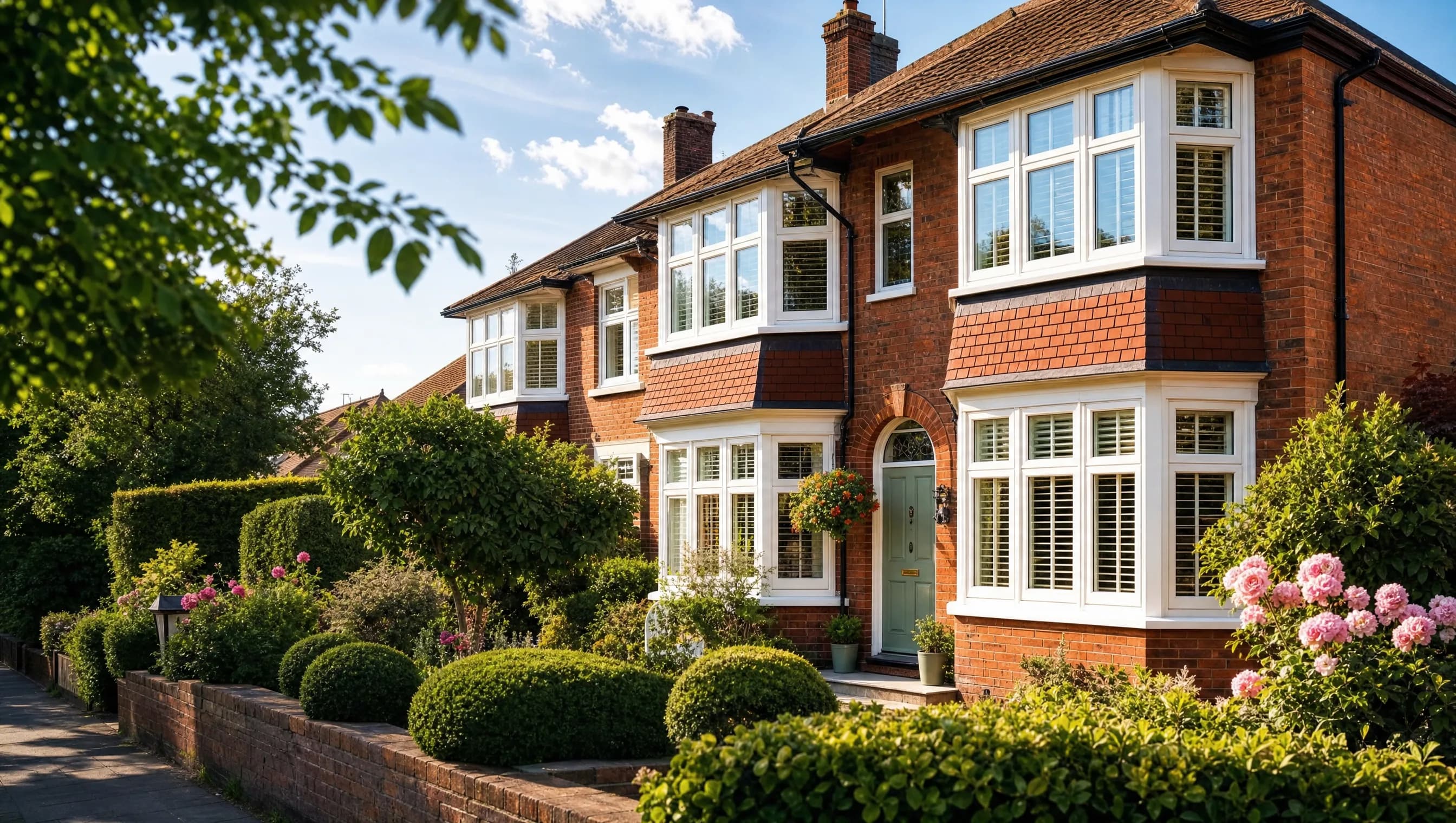
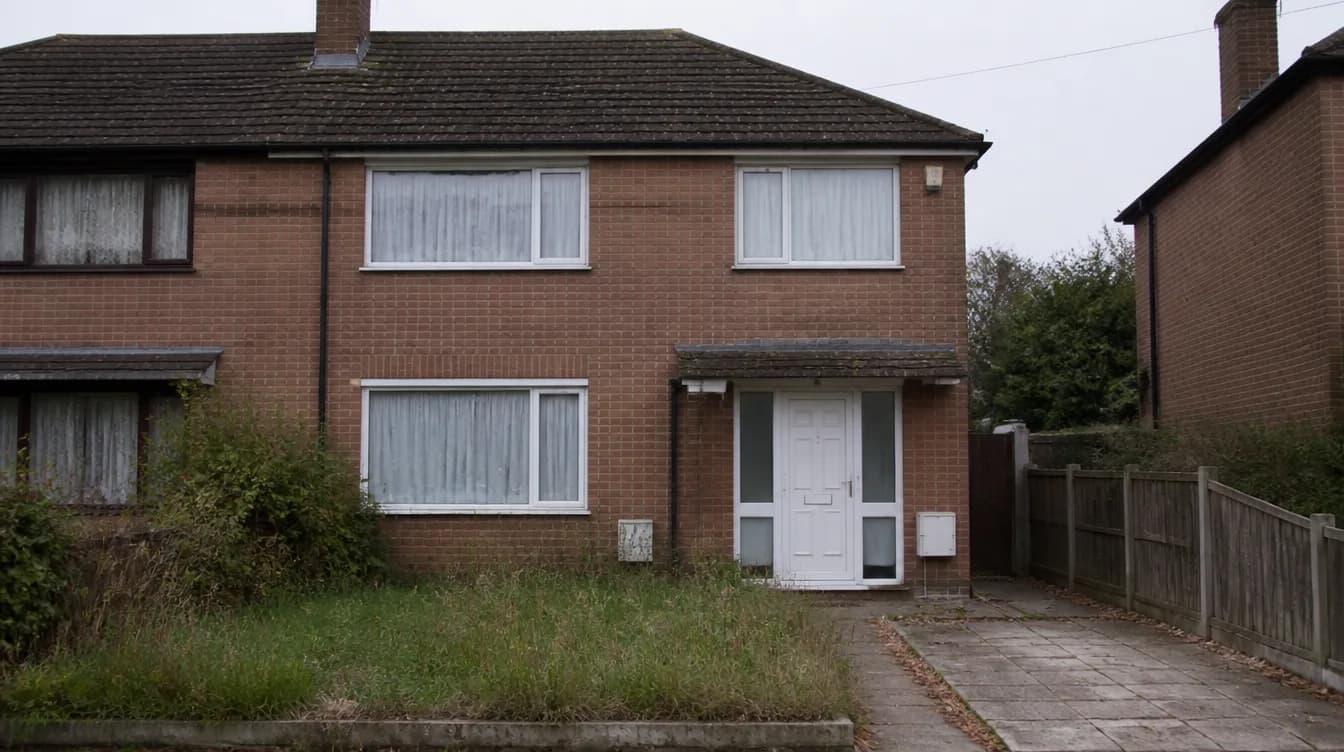
Empty by process: The long-term empties the enforcement toolkit was not built for
Some of the homes on a council's long-term empties list are empty because the owner will not act. Others are empty because nobody can act yet, and the enforcement toolkit has very little to say about the second kind.
Every empty homes officer works from a list, and the list does not explain itself.
A property lands on it because the council tax record says it has been empty for twelve months, or eighteen, and counting. What the record does not carry is the reason it is empty. And the reason is the thing that decides what the officer can usefully do about it.
The Empty Homes Network held its national conference in Birmingham on Wednesday. I was not in the room, but the backdrop to the event is hard to miss. The Network's own reading of the 2025 Council Taxbase statistics puts the number of empty homes in England at 542,276, up by nearly eight per cent on the year before, and rising for the fourth year running. That number tends to get quoted as a single population with a single solution. It is neither, and a good part of the officer's working week goes on finding that out one property at a time.
A property can be empty because its owner will not deal with it. It can be empty because its owner cannot. And it can be empty because, in any practical sense, there is no owner in post to deal with it at all. The enforcement toolkit was built almost entirely for the first of those, and it shows.
What the toolkit assumes
The powers a council holds over a long-term empty are real and, used well, effective. The long-term empty premium adds a hundred per cent to the council tax bill once a property has stood empty for a year. After five years that doubles. After ten it trebles. An Empty Dwelling Management Order under the Housing Act 2004 lets the authority step in and manage a property an owner has left to decline. Enforced sale recovers a debt that has been secured against the property itself. A section 215 notice deals with the state of the land.
Behind every one of those powers sits the same assumption. Each presumes a proprietor the council can identify and serve, and who is then in a position to do something about the notice once it lands. The premium is a financial nudge aimed at a person who has the means and the authority to act and has chosen not to. The management order presumes there is an owner whose inaction the council is stepping into. The toolkit is, in other words, designed around the owner who will not.
It has very little to say about the owner who cannot, and almost nothing to say about the property where nobody is yet in a position to act on anything at all.
The data only counts months
Part of the problem is that the officer is often the last person to find out which of those situations they are looking at.
The primary source for an empty homes team is the council tax register. It is very good at one thing, which is counting how long a property has been empty. It is close to silent on why. A grant of probate is not an event that registers anywhere in a council's property data. A Court of Protection deputyship application is not either. Neither is recorded against the address in any system the empty homes team routinely sees. The duration is visible from the desk. The cause is not.
So the officer learns the cause, if at all, by knocking on doors and writing letters, then waiting on a reply that an estate in pre-grant limbo may have nobody available to send. The enforcement timeline can be some way advanced before the reason surfaces. I have seen that go wrong from both sides: a council pursuing a property as though someone is ignoring it, when no one is ignoring it, because there is no one there yet to do so.
The property whose owner has died
Start with the most common version. The sole owner of a house dies. The house is now part of an estate, and an estate is not a person on whom a notice can be served.
In a clean case, a grant of probate takes eight to twelve weeks. A contested estate takes considerably longer, and so does one where the heirs still have to be traced before anyone can inherit. There is more on the probate genealogy side of that tracing work in an earlier piece. Either way, until the grant is issued there is no personal representative with the legal authority to sell the property or insure it properly, let alone respond to a council that wants something done. I have written before about the insurance, council tax and security timeline an empty probate property runs to, and the central point of that piece holds here as well.
An estate does get some protection. A property left empty by the death of its sole occupier is exempt from council tax under Class F while probate is pending and for six months after the grant, and since April 2025 a further twelve-month exception runs against the premium where the property is being actively marketed. But those reliefs are a window, not a shelter. A contested estate, or one held while heirs are traced, can burn through the window while still legally unable to do very much, and then the premium engages on schedule.
The premium is meant to push an owner into action. There is no owner to push. The cost lands on the estate, which means it lands on the eventual beneficiaries, who had no authority to deal with the property during the months the premium was accruing and frequently did not know it was accruing at all. The officer applying it is following the process correctly. The process was simply not written with this property in mind.
The property whose owner is alive but cannot act
The second version is quieter, and in my experience even less well understood by the systems that touch it.
The owner is alive. They have gone into residential care, or lost mental capacity, and the house they own now stands empty. This is not an obscure case. The Empty Homes Network's policy lead, Adam Cliff, has described it plainly: a house can sit empty because the owner has moved into a care home and has no close relative on hand to decide what happens to it. The sector recognises the situation. What gets less attention is what it does to the enforcement options.
For anyone to deal with that property, somebody has to be appointed by the Court of Protection as deputy for property and affairs. That application is not quick. The current window between an application going in and an order coming back runs to anywhere from four months to a year.
Until the order is made, there is no deputy in post. An interim order can be sought in urgent cases, but it is a narrow instrument and it does not put a fully empowered deputy in place. So for the better part of a year there can be a living owner, a real and pressing need to manage the property, and no person with the standing to do it. For the empty homes officer, the relevant point is the simple one. A property in that position is on the list, ageing month by month, and there is genuinely no one to enforce against.
Apply the premium here and the position is worse than awkward. The bill falls on a person who lacked the capacity to prevent it, drawn from funds that exist to pay for their care.
Where this leaves the officer
None of this is an argument that empty homes enforcement is misconceived. The premium and the management order do real work on the properties they were designed for, and the owner who genuinely will not act should feel the full weight of them.
It is an argument for reading the list before acting on it. A long-term empty that is empty by process, rather than by choice, is not an enforcement target. It is a property waiting for a person, and the most useful thing an officer can do is establish which person, and how far away they are. That might mean a call to the solicitor handling the estate. It might mean a line to the Office of the Public Guardian to find out where a deputyship application has got to. It is slower than serving a notice, and it is the intervention that actually fits the case.
It matters at the other end too. We have taken over the management of probate and Court of Protection properties where the council tax premium had already doubled the bill before anyone with the authority to sell had been appointed. The newly appointed deputy or personal representative does not arrive to a clean file. They inherit the premium that has been mounting and a property that has drifted in condition while nobody was responsible for it. An officer who can tell the will-not from the cannot is also, at one remove, protecting the appointee who is about to walk into it.
A stake in the ground
A long-term empty is not one thing. The headline figure quoted at conferences and in strategy documents covers at least three different problems wearing the same label. The sector is not blind to that, and the reasons a property falls empty are discussed openly enough; what has not quite caught up with them is the enforcement response.
The toolkit is built for one of those reasons: the owner who has the capacity and the authority to act and has decided not to. For the property whose owner has died and whose estate has no representative in post, and for the property whose owner is alive but waiting on the Court of Protection, the toolkit does not just work less well. It is pointed at someone who is not there. In my view, the empty homes profession would get more out of triaging its lists by the reason a property is empty than by the number of months it has stood empty, because the reason is what decides whether enforcement is the answer or an irrelevance.
I would be interested to hear from empty homes officers, and from the probate solicitors and deputies who deal with the same properties from the other side, on this. Whether you recognise the same label covering very different cases on your own list, or whether you have a way of triaging it that handles them better than what I have described here. You can find me at [email protected] or on LinkedIn.
At Prospect PS we manage these properties on behalf of executors and deputies from the day they are appointed, because the months before anyone is appointed are the months the property can least afford.

Managing Director, Prospect PS Ltd
David Halliwell is Managing Director of Prospect PS Ltd, a UK property management company working with solicitors, professional deputies, insolvency practitioners, and local authorities. Prospect PS provides end-to-end property management for probate, Court of Protection, insolvency, LPA receivership, and local authority empty homes across England and Wales. Every case is managed in-house to a consistent standard, with all contractors vetted for compliance and security before they enter a property. Reporting is AI-driven, producing a structured, timestamped record from first instruction to final disposal.